
Arrest History in Fulton County
An arrest in Fulton County may begin with the Sheriff, Gloversville Police, Johnstown Police, New York State Police, or another authorized state officer. Towns rely heavily on the Sheriff and State Police. The agency that made the arrest owns the incident or arrest report. If the person enters local custody, the Fulton County Correctional Facility creates a different intake record. The court then opens a docket at arraignment, and prosecutors may change, reduce, or decline the first allegations.
The Fulton County Sheriff's Office is based at 2712 State Highway 29 in Johnstown. Its five divisions include Police, Civil, Communications, Corrections, and Administration. The county is broad, so Sheriff patrol work includes roads, waterways, and snowmobile routes beyond the two cities. This range helps explain why Fulton County arrest records may start with several agencies even when all local custodial bookings converge at one jail.
The official Sheriff page shows the headquarters and its divisions.
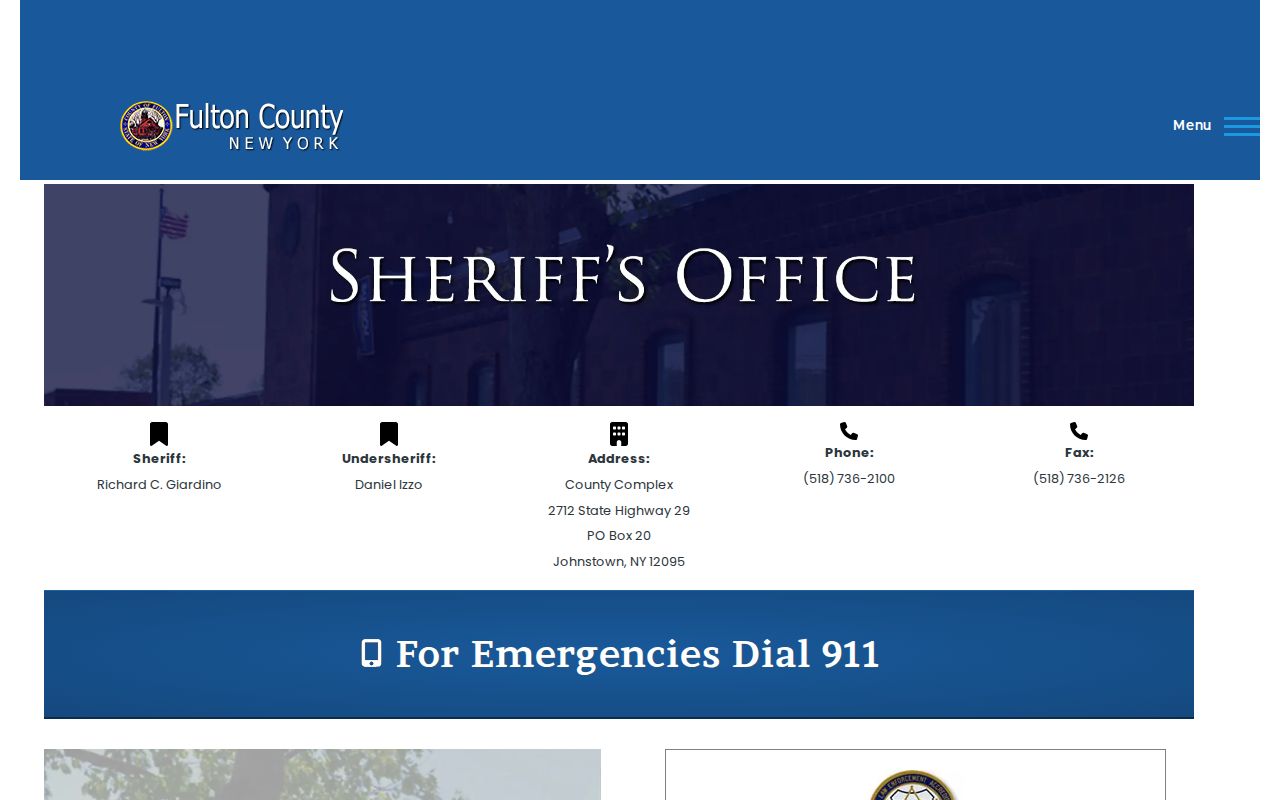
That agency profile is the right starting point for a Sheriff-made arrest, but it is not a live roster or a complete arrest-history search.
Fresh Fulton County Booking Search
Fulton County does not publish an official daily booking log, jail roster, arrest blotter, or mugshot gallery. For a recent custodial arrest, call the Correctional Facility at 518-736-2198 and search VINE. The jail stands at 2710 State Highway 29, next door to the Sheriff at 2712. That one-number address difference matters. The facility operates around the clock, holds up to 165 people, and reports an average daily population of about 125 on its current county page.
VINE provides Fulton County custody searching and notifications when participating data is available.
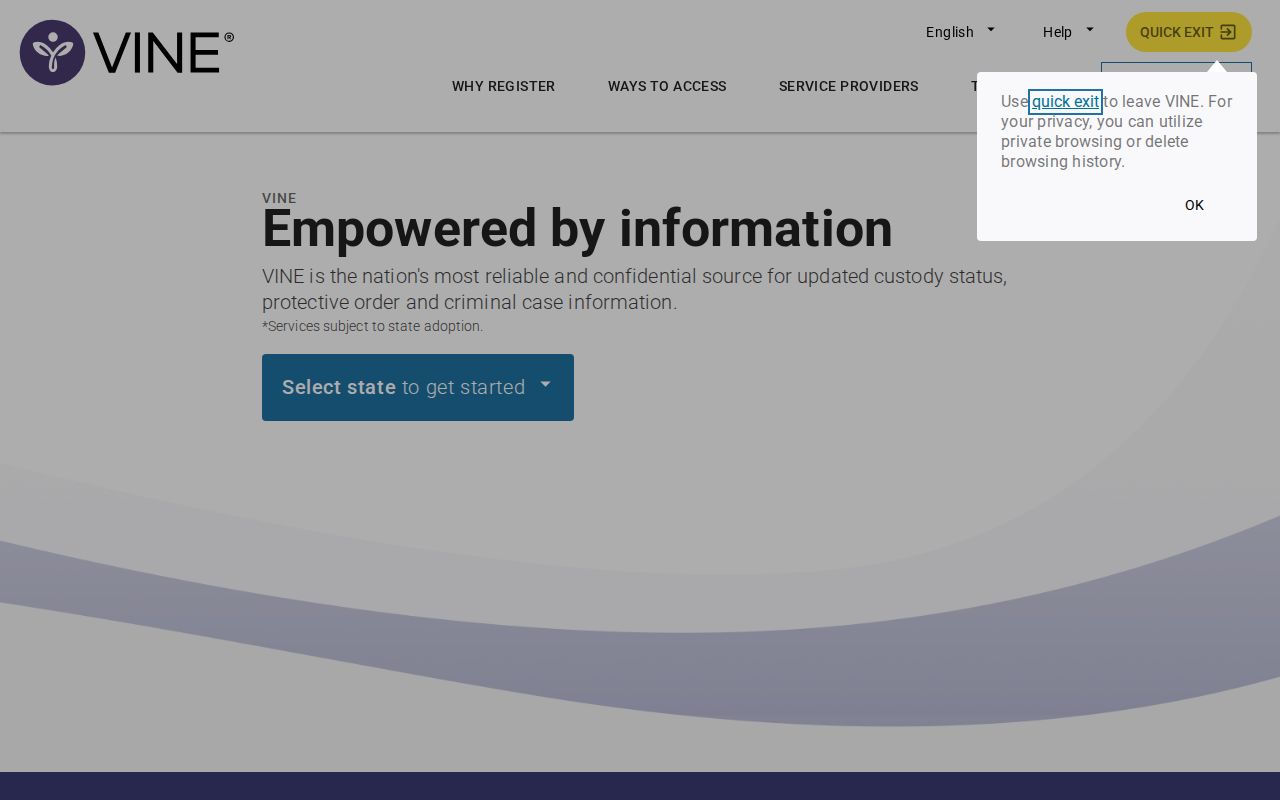
The interface may show custody status, the holding agency or facility, an identifier, a custody event, and release information. It can also offer phone, email, text, or TTY alerts. VINE is a custody tool. It is not a certified arrest record, an incident narrative, or proof of the final court result.
If VINE has no match, check the spelling and ask the jail whether the person is in current local custody. A transfer, release, data delay, or noncustodial arrest can explain an empty result. After a state-prison transfer, use the DOCCS Incarcerated Lookup instead. Newly lodged people generally will not appear in DOCCS because county pretrial custody and state imprisonment are separate stages.
How to Look Up Fulton County Arrests
Start with the approximate date, place, and likely arresting agency. Those details determine which office can locate the source report. Then follow the booking into custody and court records. Each step answers a different part of the event, and no public product replaces all five channels.
- For immediate custody, call the Fulton County Correctional Facility at 518-736-2198 and search VINE. Do not begin with DOCCS for a fresh county booking.
- Ask the arresting agency for its incident or arrest report. Use Sheriff Civil Division for Sheriff cases, the appropriate city for a Gloversville or Johnstown case, and the NYSP FOIL portal for State Police records.
- Contact the likely arraignment court. An off-hours arrest can start in the jail's Centralized Arraignment Part and then return to a City or Town Court; an indicted felony proceeds in Fulton County Court.
- For your own complete New York fingerprint-linked history, request a Personal Record Review from the New York State Division of Criminal Justice Services through IdentoGO.
- Use OCA Criminal History Record Search for a statewide public name-and-birth-date court summary, or file a focused FOIL request when the correct agency has no public online record.
Recheck the court later. Booking charges come from intake information, while the filed accusation reflects prosecutorial review. A certificate of disposition from the court that decided the case is the best source for the result. The broader Fulton County criminal court case records explain the court-file path in more depth.
Who Owns Fulton County Arrest Reports
Agency ownership is a common trap in Fulton County. A report stays with the law-enforcement body that created it, even when the county jail received the arrested person. Gloversville Police records therefore do not move into the Sheriff's Civil Division just because the person was lodged at Fulton Corrections. Johnstown Police and New York State Police reports follow the same rule.
| Arresting agency | Report route | Custody route |
|---|---|---|
| Fulton County Sheriff | Civil Division, in-person FOIL form and ID copy | Fulton jail and VINE |
| Gloversville Police | City police or city records-access channel | Ordinarily Fulton jail after local processing |
| Johnstown Police | City police or city FOIL channel | Ordinarily Fulton jail |
| New York State Police | NYSP FOIL request | Fulton jail when lodged locally |
Ask for a named document, not “everything.” An incident number, date and time range, exact location, agency, and record type can narrow the search. The court, not the police, supplies a certificate of disposition.
What an Arrest Record Shows
Fulton County arrest files change as the event moves through the system. The agency report may include probable-cause allegations and officer observations. Jail intake adds custody details. The court file adds the accusation actually filed and later orders. Privacy, sealing, and active-investigation rules can remove or redact some fields from a released copy.
| Incident or Case Number | The arresting agency's identifier used to locate its report. |
|---|---|
| Arrest Date and Place | When and where the arresting agency reports the event occurred. |
| Arresting Agency | The Sheriff, city police, State Police, or another authorized officer's agency. |
| Alleged Offenses | Statutes or charge descriptions alleged at arrest, which may change after review. |
| Booking Details | Booking number and time, received charges, holds, bail, facility, and release event. |
| Photo and Fingerprints | Intake identifiers created by the jail; no public Fulton mugshot gallery was located. |
| Court Trail | Docket or indictment number, filed charges, appearances, orders, and disposition held by the court. |
Note: A released record may omit protected witness, victim, juvenile, medical, sealed, or active-investigation information under New York law.
Fulton County Sheriff FOIL Process
Fulton County does not advertise a separately named Sheriff's Records Division. The practical report counter is the Civil Division. A requester appears in person, completes the Sheriff's FOIL Records Request, and provides a copy of a driver's license. An investigator reviews the request. Civil Division then calls when an approved report or denial letter is ready for pickup. The county publishes no instant-copy promise, fixed response time, email submission method, or report fee for this process.
The Sheriff Civil Division instructions describe the report request route.
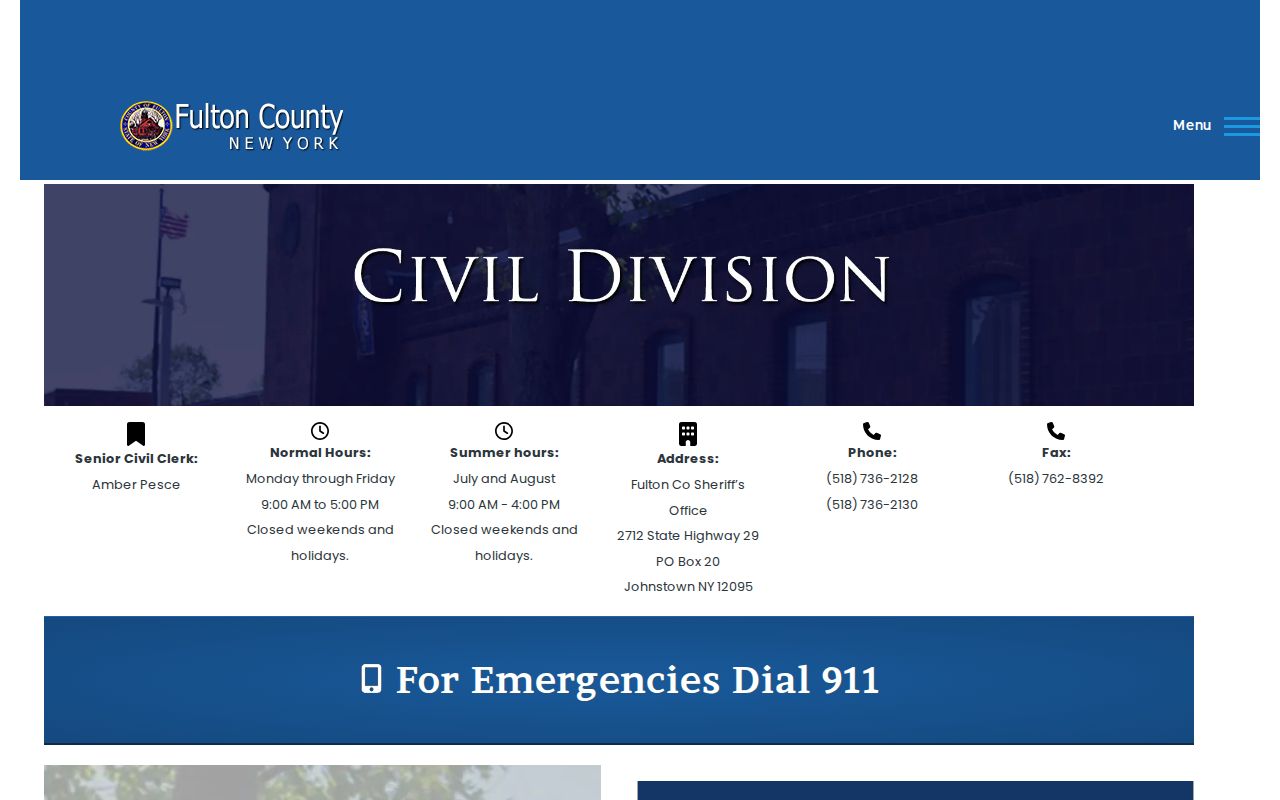
The page also separates crash reports from incident reports. A person involved in a Sheriff-investigated crash may use the counter or the linked CrashDocs route. This does not transfer a city police report to county custody.
Fulton County Sheriff Civil Division
2712 State Highway 29
Johnstown, NY 12095
518-736-2100
Bring the completed request information and a copy of the requester's driver's license for an incident-report request.
Recent Arrests and Booking Logs
No official Fulton County booking log or arrest blotter was located. The absence of a live roster does not mean booking records do not exist. It means searchers must use the jail call, VINE, the arresting agency, and court sequence. Entries can disappear from custody tools after release or transfer, and a noncustodial appearance ticket may never create the kind of jail result a reader expects.
The Sheriff's Police Division reports more than 14,000 calls for service each year and a 50 percent rise in arrests since 2015. Those are operating measures from the current county page, not a current arrest list and not 14,000 arrests. The Road Patrol and Criminal Investigations page supplies that local context.
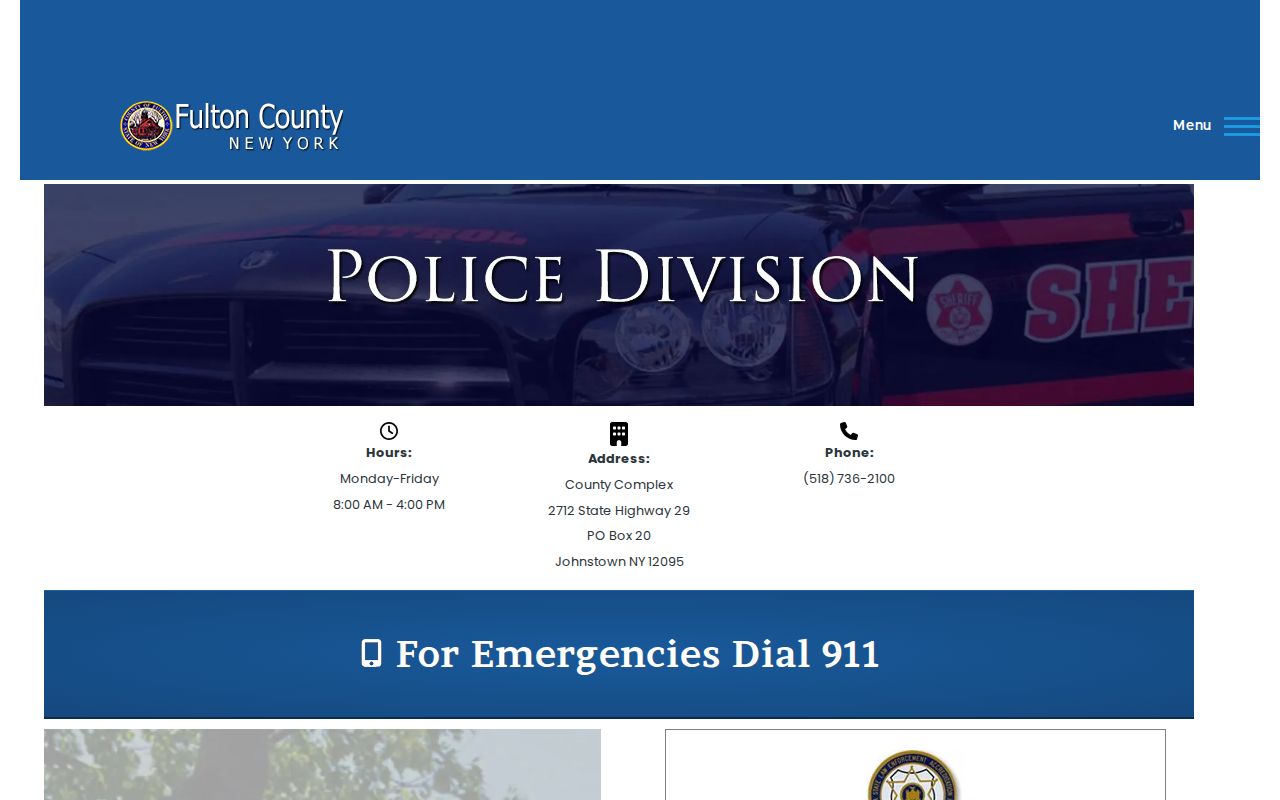
Its broad duties also show why county arrest records can arise from rural road patrol, marine patrol, snowmobile work, or major-crime investigations rather than a city beat.
Fulton County Arrests Through CAP
The Fulton County Centralized Arraignment Part operates inside the county jail. It gives police agencies across the county one place for off-hours arraignments before local courts resume their own calendars. At intake, jail staff identify and search the person, inventory property, create a booking number, take a photo and fingerprints, conduct health screening, and enter charges and holds. The arraigning judge then addresses counsel, release, bail or remand, and the next court date.
Record flow: Arresting agency › Fulton County booking › CAP arraignment › court of origin › filed disposition › DCJS arrest cycle.
CAP can make the physical location and legal venue look like the same thing. They are not. A Gloversville misdemeanor can be arraigned at the jail and later remain a Gloversville City Court file. An indicted felony moves to Fulton County Court. Follow the court named on release papers or the appearance notice instead of assuming the jail keeps the full case file.
Fulton Arrest Fingerprints and DCJS
Reportable arrest fingerprints support transmission to the New York State Division of Criminal Justice Services. DCJS groups fingerprint-linked arrests and reported prosecution results into arrest cycles. That official rap sheet is not a public name-search product. The person named in the record, or that person's attorney, can use DCJS Personal Record Review through IdentoGO.
A suppressed review leaves out sealed or confidential events. An unsuppressed review can show them to the subject, which makes it useful when checking whether a dismissal or sealing order reached DCJS. A missing outcome may require a certificate of disposition from the deciding court and a DCJS challenge. A public OCA CHRS search is different: it uses an exact name and date of birth, costs $95 per combination in the research reviewed, omits sealed matters, and produces an uncertified court summary.
New York's sealing laws matter to Fulton County arrest history. Favorable terminations are ordinarily sealed under CPL 160.50, and certain violation dispositions fall under CPL 160.55. A public absence can therefore reflect lawful sealing rather than an error.
Fulton Booking Charges Can Change
A booking charge records what the jail received after arrest. It does not lock the prosecutor or court into that wording. The District Attorney may file a different accusation, reduce or dismiss allegations, or present a felony to a grand jury. A judge can later issue orders, accept a plea, conduct a trial, or dismiss a charge. Each change belongs in the court trail, not in a frozen screenshot of custody data.
- Booking charge
- The alleged offense entered at jail intake.
- Accusatory instrument
- The complaint, information, indictment, or other paper that formally starts the prosecution.
- Disposition
- The result of a case or individual charge.
- Certificate of disposition
- The court-certified statement of the case outcome.
When two sources disagree, use the source closest to the fact: police for its report, Fulton Corrections for physical custody, and the originating court for the adjudicated result.
Arrests vs Convictions
Arrest and conviction records are created at different points and prove different things. A Fulton County arrest record supports that an agency took enforcement action or a booking occurred. A conviction requires a guilty plea or verdict recorded by a court. Release without charges, prosecutorial decline, dismissal, acquittal, or later sealing can all separate the arrest entry from a public conviction result.
| Arrest Record | Conviction Record |
|---|---|
| Created by police and, if booked, Fulton Corrections | Created by the court after a guilty plea or verdict |
| Shows allegations, intake charges, and custody events | Shows adjudicated charges, disposition, and sentence |
| Held by the arresting agency and jail | Held by the originating court and reported to DCJS |
| May end in release, no filing, dismissal, or sealing | May lead to sentence, appeal, or eligible sealing |
Note: An arrest is not proof of guilt, and a booking charge should never be reported as though it were a conviction.